
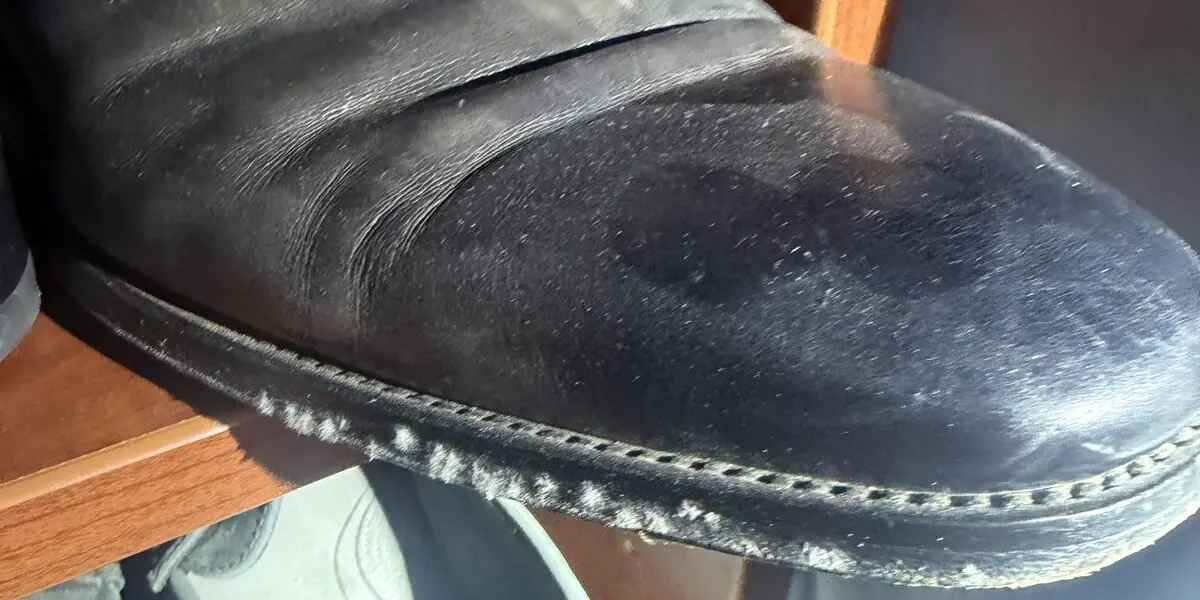
The homeowner called because his clothes were growing mold. Not boxes in a storage room. The clothes and shoes in his closet, the ones he wears. When I opened the closet door, a black leather dress shoe on the shelf had a white fuzz running along the welt and across the toe.
A single leak usually leaves a single stain. Mold on clothing that has never been wet tells you something different: the air in the house is carrying too much moisture. So this job turned into a full moisture investigation with indoor air quality testing, from the crawlspace up to the roof. Below is what I found in this 1987 South Surrey home built over a crawlspace, and why each finding matters.
Why does mold grow on clothes and shoes?
Mold needs food, a comfortable temperature and moisture. Leather, cotton and wool are food. A heated house supplies the temperature. When mold grows on a dry shoe, the missing ingredient is coming from the air itself: indoor humidity that stays high for weeks at a time.
Closets tend to show it first. They often sit against exterior walls, they run cooler than the rest of the room, and the air inside barely moves. If your clothes or shoes are growing mold, the whole house is worth investigating, and so is the air your family breathes every day. That's why I recommended air sampling on top of the visual inspection.
How is indoor air tested for mold?
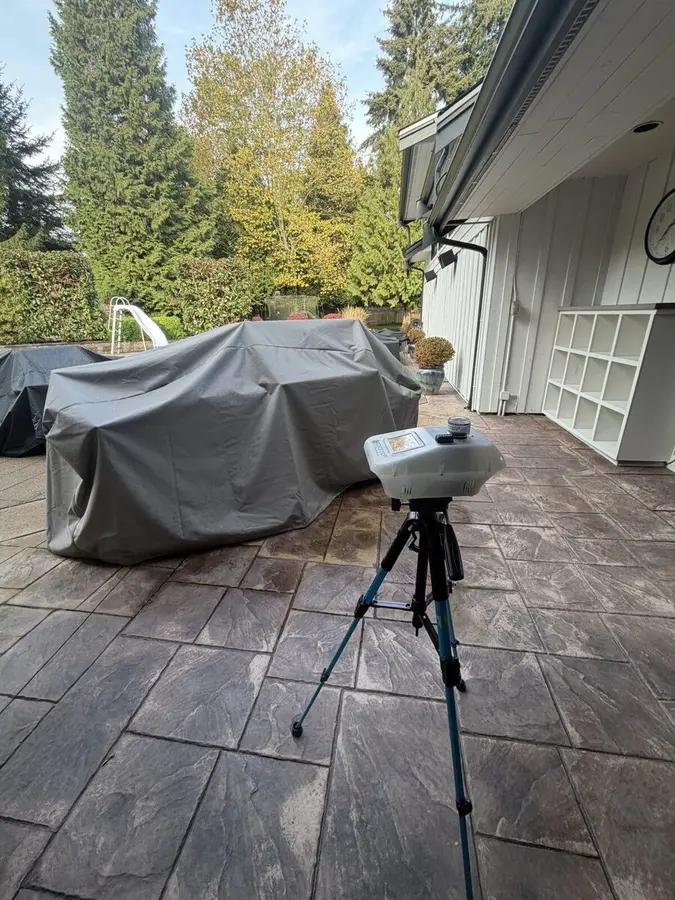
Air sampling compares the inside of the house to the outside. I always start outdoors. A calibrated pump on a tripod draws a measured volume of outdoor air through a spore trap cassette, which catches whatever is floating in that air. Then I take samples inside, in the rooms of concern, with the same setup. The cassettes go to an accredited lab, where analysts identify and count the spores.
Outdoor air always contains mold spores, and the counts shift with the season and the weather. A number on its own means very little. What tells the story is the comparison: indoor counts higher than outdoors, or indoor mold types that don't show up outside, point to mold growing somewhere inside the building.
What the lab found
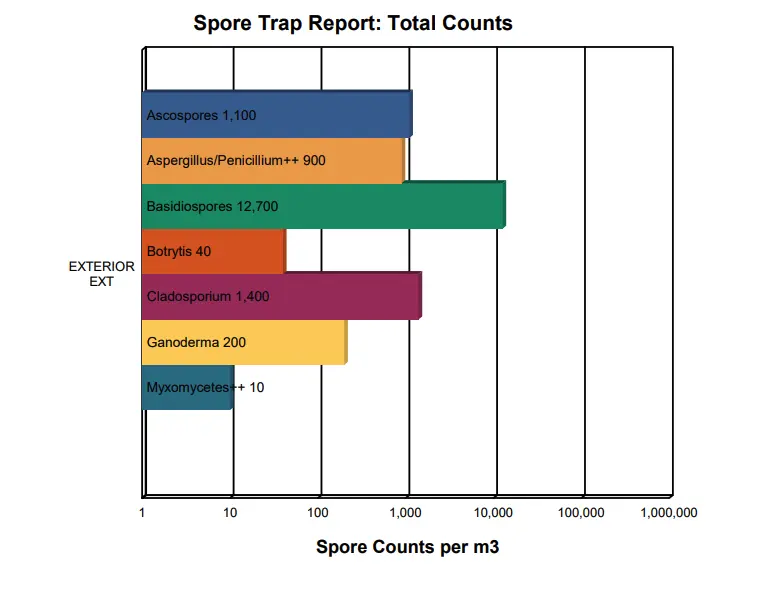
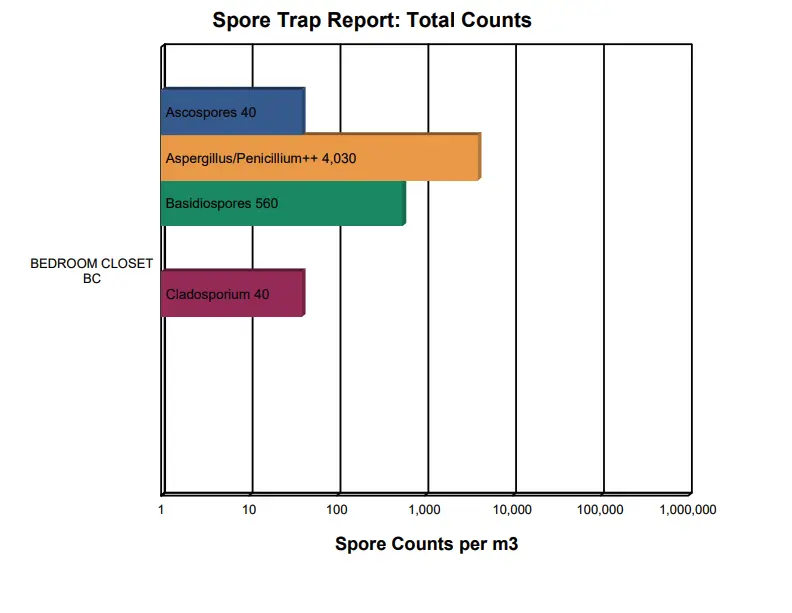
The outdoor sample came back at about 16,350 spores per cubic metre, mostly basidiospores, which come from mushrooms and other fungi outside. The bedroom closet came back lower overall, at about 4,670. A lower indoor total can look like good news. The makeup of the sample says otherwise.
| Spore type | Outdoor (spores/m³) | Bedroom closet (spores/m³) |
|---|---|---|
| Aspergillus/Penicillium | 900 | 4,030 |
| Basidiospores | 12,700 | 560 |
| Cladosporium | 1,400 | 40 |
| Ascospores | 1,100 | 40 |
| Ganoderma | 200 | Not detected |
| Botrytis | 40 | Not detected |
| Myxomycetes | 10 | Not detected |
| Total | 16,350 | 4,670 |
Outdoors, Aspergillus/Penicillium made up about 5 percent of the spores. In the closet it made up 86 percent, at 4,030 spores per cubic metre, roughly four and a half times the outdoor level. The types that dominate outdoor air, like basidiospores and Cladosporium, dropped way off inside.
When one group of mold climbs indoors while the outdoor types fall away, the spores aren't blowing in from outside. Something inside the house is producing them. Aspergillus and Penicillium are among the most common molds on damp building materials and household items, which fits what we saw on the shoes and clothes.
What did we find in the crawlspace?
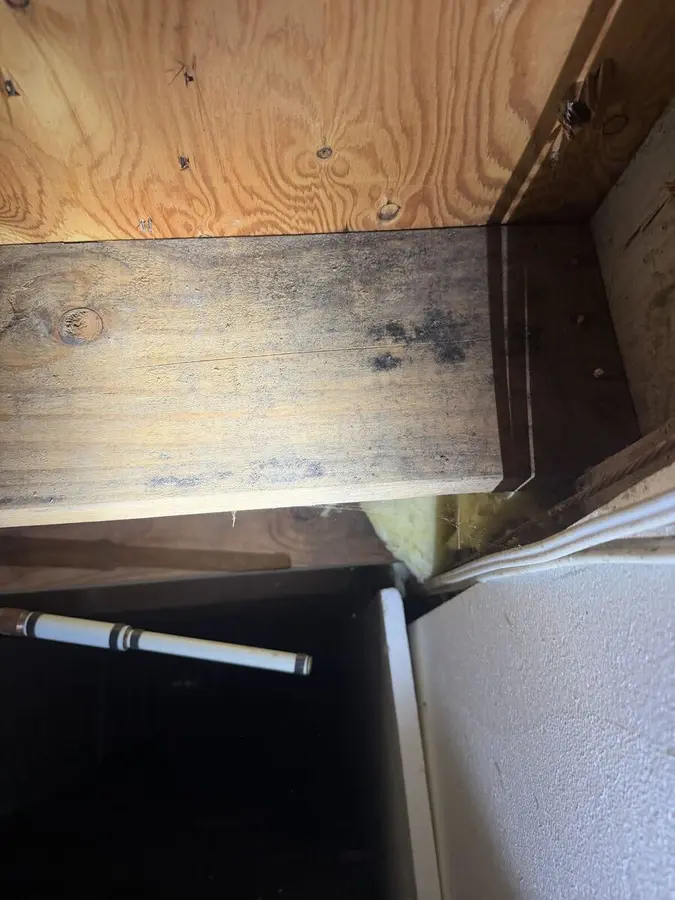
Many older homes in the Lower Mainland sit on a crawlspace. That design works as long as the ground underneath stays dry. When it doesn't, the crawlspace becomes the dampest part of the house, and nobody goes down there to notice.
In this home, microbial growth covered the beams, joists and subfloor throughout the crawlspace. It wasn't one corner under a bathroom. Dark staining spread across framing like this means the wood has been sitting in damp air for a long time.
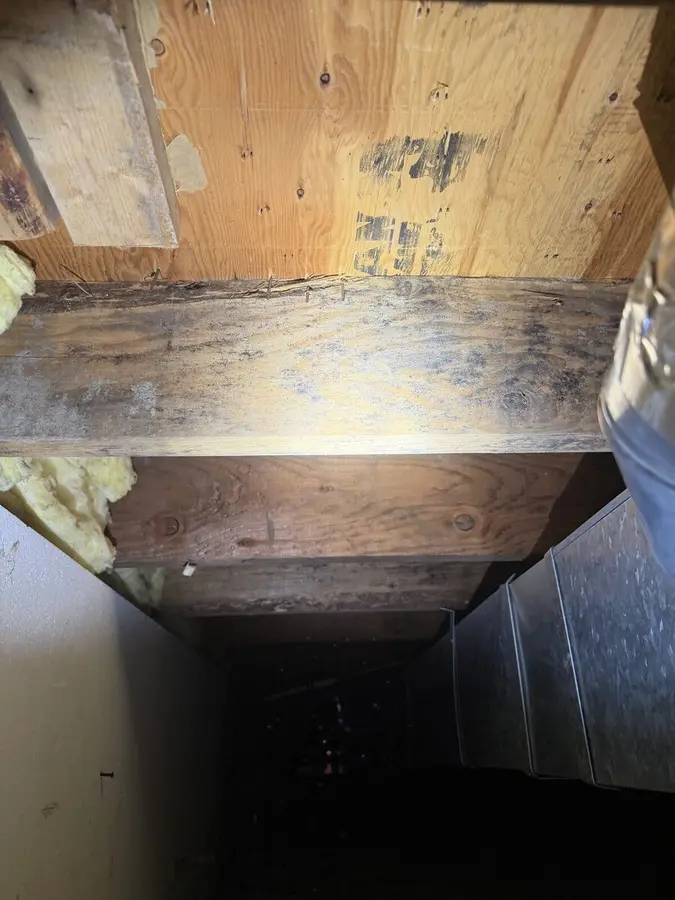
A crawlspace problem doesn't stay in the crawlspace. Warm air escapes out the top of a house through the upper floors and the attic, and replacement air gets pulled in from below, including from the crawlspace through gaps around pipes, wires and ducts. Building scientists call this the stack effect. Moisture and spores from below end up in the rooms you live in, which fits what we saw in the closet.
Where was the water coming from?
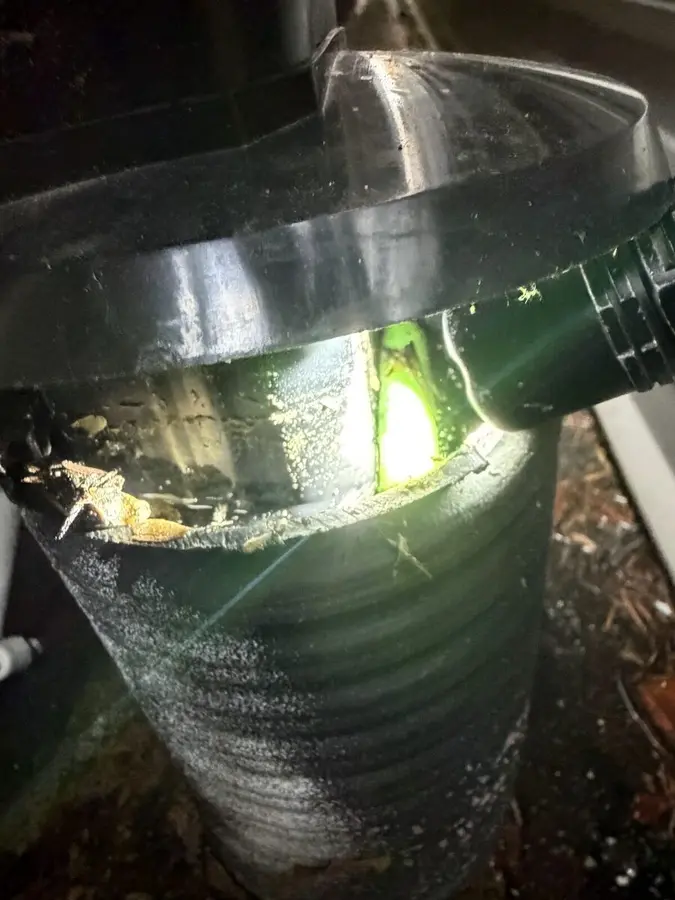
Perimeter drains are pipes laid around the footings. They collect groundwater and carry it away before it builds up against the foundation. This house, built in 1987, still had Big O, the black corrugated plastic drain pipe found in a lot of older Lower Mainland homes.
Looking down the cleanout, the line was full of debris. Big O doesn't age well. Its thin walls can be crushed by the soil around it, tree roots work into the perforations, and silt settles in the ridges until water stops flowing. Once the drains clog, groundwater has nowhere to go but into the soil against the foundation and up into the crawlspace.
I recommended a drainage contractor run a camera through the whole system. When Big O is damaged or keeps clogging, replacing it with modern perimeter drain pipe and proper cleanouts is usually the long-term fix, rather than flushing the old line every year.
Why was there mold on the attic door and around the skylight?
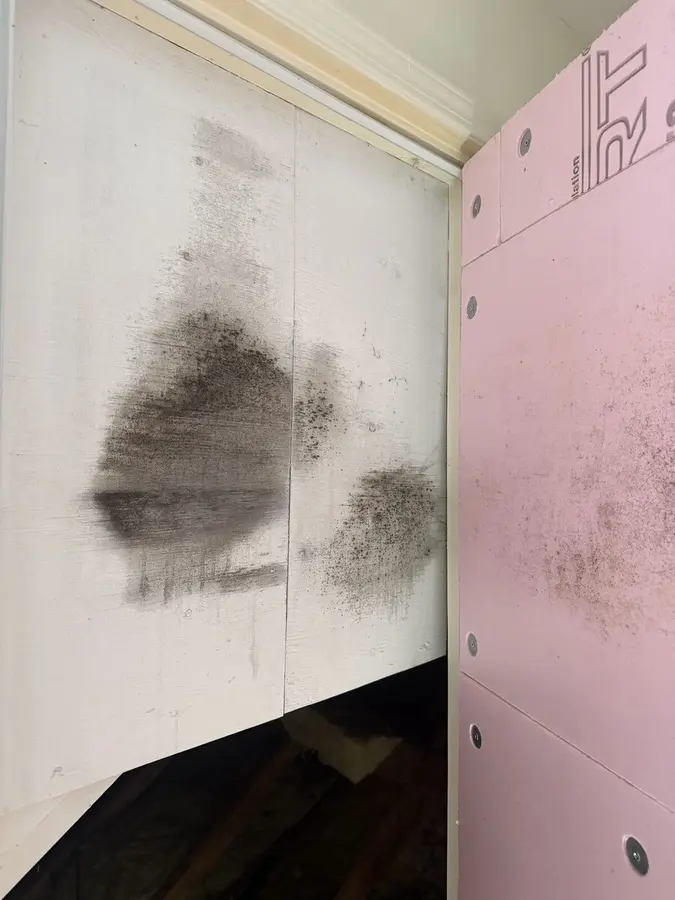
The attic access door had mold growth on it. An attic door sits right on the line between warm house air and a cold attic. If it isn't weatherstripped and insulated well, warm, moist air slips past it and condenses on the cold surface. Feed that with humid air rising from a wet crawlspace and the door stays damp enough for mold.
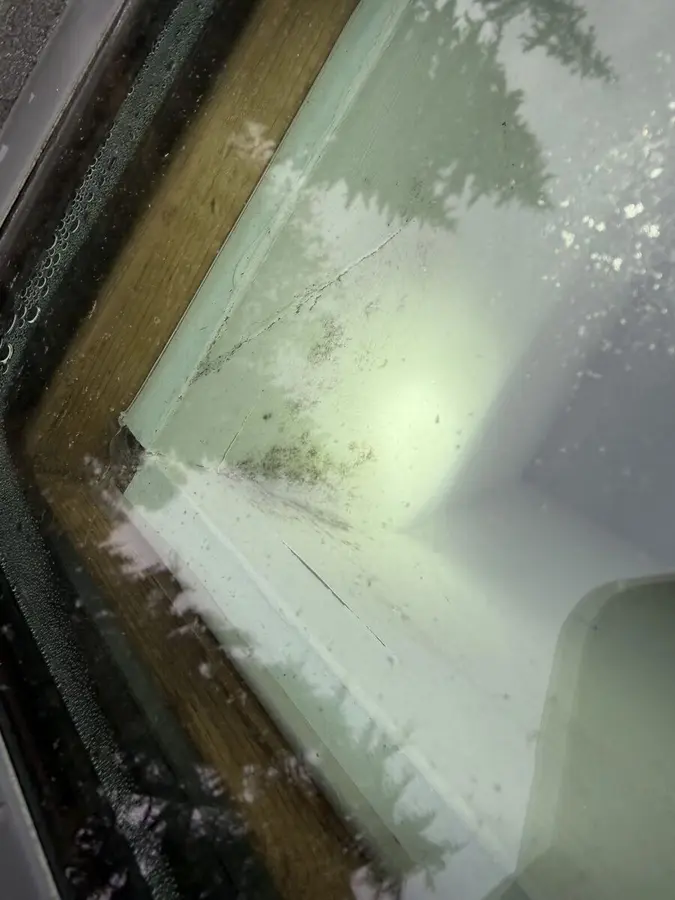
The second spot was the ceiling inside the skylight well. A skylight is often the coldest surface in a room. Moist indoor air reaches the cold glass and the shaft around it, condenses, and keeps the drywall wet. There was visible growth on the drywall in the shaft, and condensation along the edge of the glass.
Does a missing chimney cap matter?
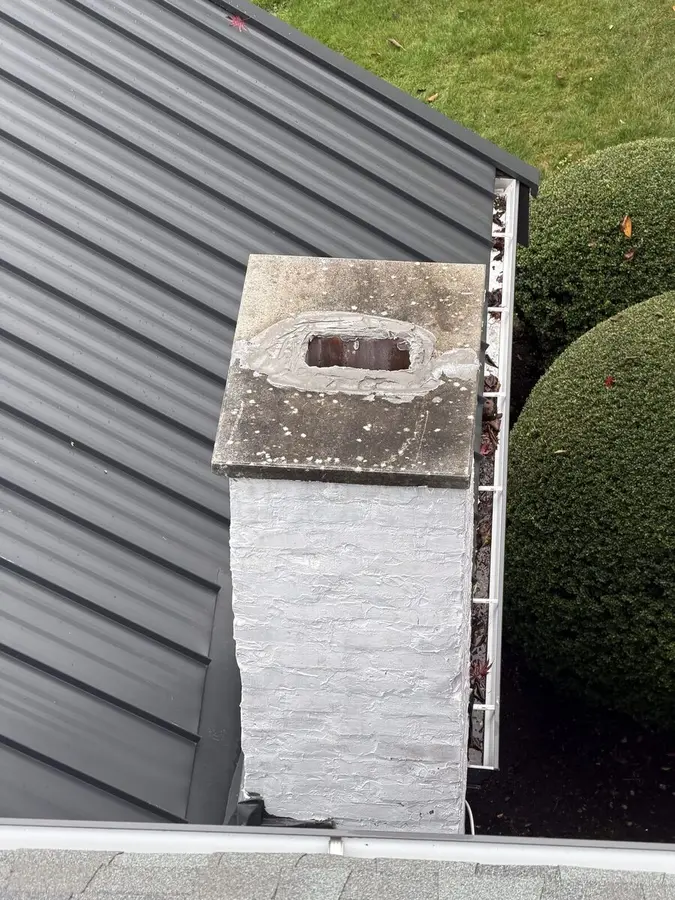
The chimney had no cap. A cap keeps rain, birds and debris out of the flue. Without one, rain falls straight down the chimney and soaks the masonry and the damper area, adding water to a house that already has too much. It's one of the cheaper fixes on this list, and on a home fighting moisture it's worth doing right away.
How do these problems connect?
None of these findings is a separate problem. The clogged perimeter drains let groundwater sit around the foundation. The crawlspace stays wet and grows mold. Damp air from below rises through the house and condenses on the coldest surfaces it can find, like the skylight well and the attic door. It settles into closets, where it grew mold on the homeowner's shoes. The open chimney adds water from the top.
Wiping the attic door or cleaning the shoes without fixing the water means the mold comes back. The order of repairs matters: stop the water first, then remove the mold, then confirm the air is clean.
What did we recommend?
- Camera-scope the perimeter drains, and replace the Big O system if it's damaged or can't be cleared.
- Once the drainage is fixed, control crawlspace moisture with a properly sealed vapour barrier over the ground, plus dehumidification if a contractor recommends it.
- Hire a qualified mold remediation contractor to clean or remove affected materials in the crawlspace, on the attic door and in the skylight well, working from a written scope of work.
- Install a chimney cap.
- Weatherstrip and insulate the attic door, and confirm bathroom fans vent outside rather than into the attic.
- Keep indoor humidity roughly between 30 and 50 percent, and check it with an inexpensive hygrometer.
- Launder or professionally clean affected clothing and shoes, and throw out porous items that don't come clean.
- Retest the air after remediation to confirm indoor levels are back in line with the outdoor baseline.
If anyone in the home has symptoms they think could be related, they should talk to their doctor.
When should you consider mold and air quality testing?
You don't need visible mold to justify testing. Consider it if you notice any of these:
- A musty smell that doesn't go away
- Mold on clothing, shoes, furniture or stored items
- Stains or suspected growth on ceilings, walls or around windows and skylights
- Past flooding, leaks or plumbing failures
- An older home on a crawlspace that still has its original perimeter drains
- Allergy-type symptoms that ease when you're away from home
For more on what affects the air in local homes, read our guide to indoor air quality in Lower Mainland homes. Testing prices are on our pricing page.
Frequently asked questions
Can mold in a crawlspace affect the air inside my house?
Yes. Air moves upward through a house, and some of the air on the main floor is pulled up from the crawlspace through gaps around pipes, wires and ducts. Moisture and mold spores travel with it.
Why is an outdoor air sample taken during mold testing?
Outdoor air always has some mold spores in it, so the outdoor sample is the baseline. Indoor results that are higher than outdoors, or that show different mold types, point to a source inside the home.
Why would mold grow on clothes and shoes in a closet?
Leather and natural fabrics are a food source for mold. When indoor humidity stays high, closets against exterior walls stay cool with little air movement, and mold can grow on items that were never wet.
Is Big O perimeter drain pipe a problem?
It often is in older homes. The thin corrugated pipe can be crushed by soil, invaded by roots and clogged with silt. A drainage contractor can camera-scope the line and tell you whether it can be cleared or should be replaced.
Book mold testing in South Surrey and the Lower Mainland
I'm Said Noori, a Certified Master Inspector based in Richmond. Foxhound Inspections provides mold inspection and air quality testing across the Lower Mainland and Fraser Valley, including South Surrey, and it can be added to any home inspection. If your home is showing signs like these, book an inspection or call 604 779 3043.