
Most of us spend the majority of our time indoors, and in the Lower Mainland’s long, wet winters the windows stay shut for months. That makes indoor air quality worth understanding, especially if you’re buying a home or have noticed musty smells, condensation or allergy symptoms.
What affects indoor air in our region
- Moisture and condensation. Cool, damp weather and closed windows let humidity build up. Water on windows in the morning is a common sign.
- Mold. Where moisture lingers, in bathrooms, closets on exterior walls, basements or attics, mold can grow and release spores.
- Poor ventilation. Bath fans that vent into the attic, weak range hoods or an unmaintained HRV all let moisture and odours stay inside.
- Radon. A naturally occurring radioactive gas that can enter from the ground. It can’t be seen or smelled.
- Combustion appliances. Gas furnaces, water heaters, fireplaces and attached garages can be sources of carbon monoxide if something isn’t working properly.
- Renovation materials. New paint, flooring and furniture can release chemicals for a while after installation.
Simple fixes that make a difference
- Run bathroom fans during showers and for about 20 minutes after.
- Use the range hood when cooking, and make sure it vents outside.
- Keep indoor humidity roughly between 30 and 50 percent. An inexpensive hygrometer helps.
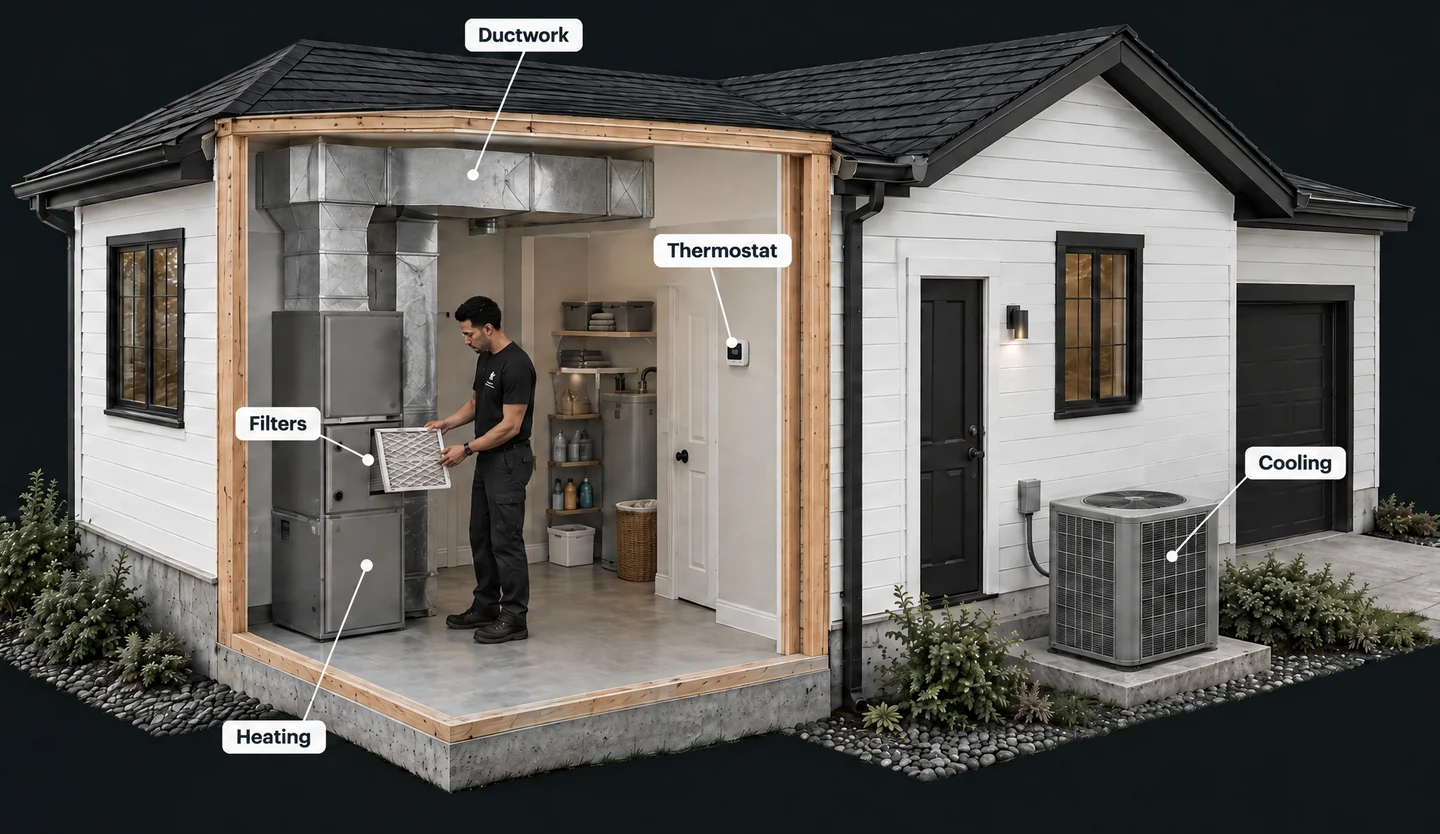
- Replace furnace filters and clean HRV filters on schedule.
- Keep furniture a little away from exterior walls so air can circulate.
- Install working carbon monoxide alarms and test them regularly.
What a home inspection can tell you
During an inspection we look for moisture-related concerns, check ventilation fans and visible ductwork, and use thermal imaging and a moisture meter to investigate suspect areas. Thermal imaging shows temperature differences that can point to moisture, but it doesn’t detect mold directly.
When to consider testing
If there are persistent musty odours, visible suspected growth, past leaks or health concerns, mold testing gives you measured results. Air samples are compared against an outdoor control sample and analyzed by an accredited laboratory. Because radon levels vary from home to home, radon testing is the only way to know your home’s level.
Both can be added to a home inspection. Get an instant quote or call 604 779 3043.